


Table of Contents
There’s a particular moment in hockey that has nothing to do with the score. It’s when a team steps onto the ice for warmups and everyone in the rink — parents, scouts, the other bench — glances over just to look at the jerseys. Some teams get that moment. Most don’t, and it’s rarely a budget problem. It usually just comes down to not knowing what actually goes into a solid ice hockey jersey design.
I’ve talked to enough coaches and equipment managers over the years to know this isn’t really about being creative. Nobody’s expecting a design degree here. What actually helps is understanding the handful of decisions that separate a jersey that looks intentional from one that looks thrown together the week before the season opener. So that’s what we’re getting into — and if you want to see finished examples while you read, Jacx Wears has full custom sportswear collections worth a look.
Does Jersey Actually Matter?
Fair question. Does any of this change how a team plays? A little, honestly, yes — not in some magical way, but confidence is real and it shows up on the ice. A player who feels good in what he’s wearing tends to skate a bit looser, a bit more sure of himself. Parents notice a sharp-looking team too, and that word travels if you’re trying to build a program or pull in donations.
Then there’s the part nobody thinks about until it’s too late — durability. Hockey is rough on fabric. Boards, sticks, gloves grabbing during every scrum along the wall. A cheap hockey jersey rips at the seams by January or fades out after a few trips through the wash. A properly built one takes the abuse all season and still looks decent in the team photo come March.
What a Jersey’s Actually Made Of
Before getting into colors and crests, it helps to know what you’re really choosing between, because a lot of “design” decisions are fabric and construction decisions wearing a disguise.
Most ice hockey jerseys use a heavier polyester than what you’d find on, say, a soccer kit, simply because hockey fabric needs to survive getting snagged on equipment constantly. Shoulders and elbows often get an extra reinforced layer since that’s where most of the contact happens. And underneath all the graphics, you’re really picking between two build styles — twill, where the numbers and logos are separate pieces of fabric sewn on, or full sublimation, where the design gets dyed straight into the fabric itself.
Twill has that classic, textured, old-school look a lot of established programs still lean toward. Sublimation opens up way more freedom — gradients, detailed crests, whatever you want — without adding weight or stiffness. Most newer custom hockey jersey orders go sublimation these days, and honestly, once you see the color range it’s easy to understand why. Manufacturers who handle production in-house, like the team behind Jacx Wears’ custom clothing process, tend to have more control over exactly this kind of fabric and printing decision than suppliers who outsource it out.
Colors: Where Teams Either Nail It or Overdo It
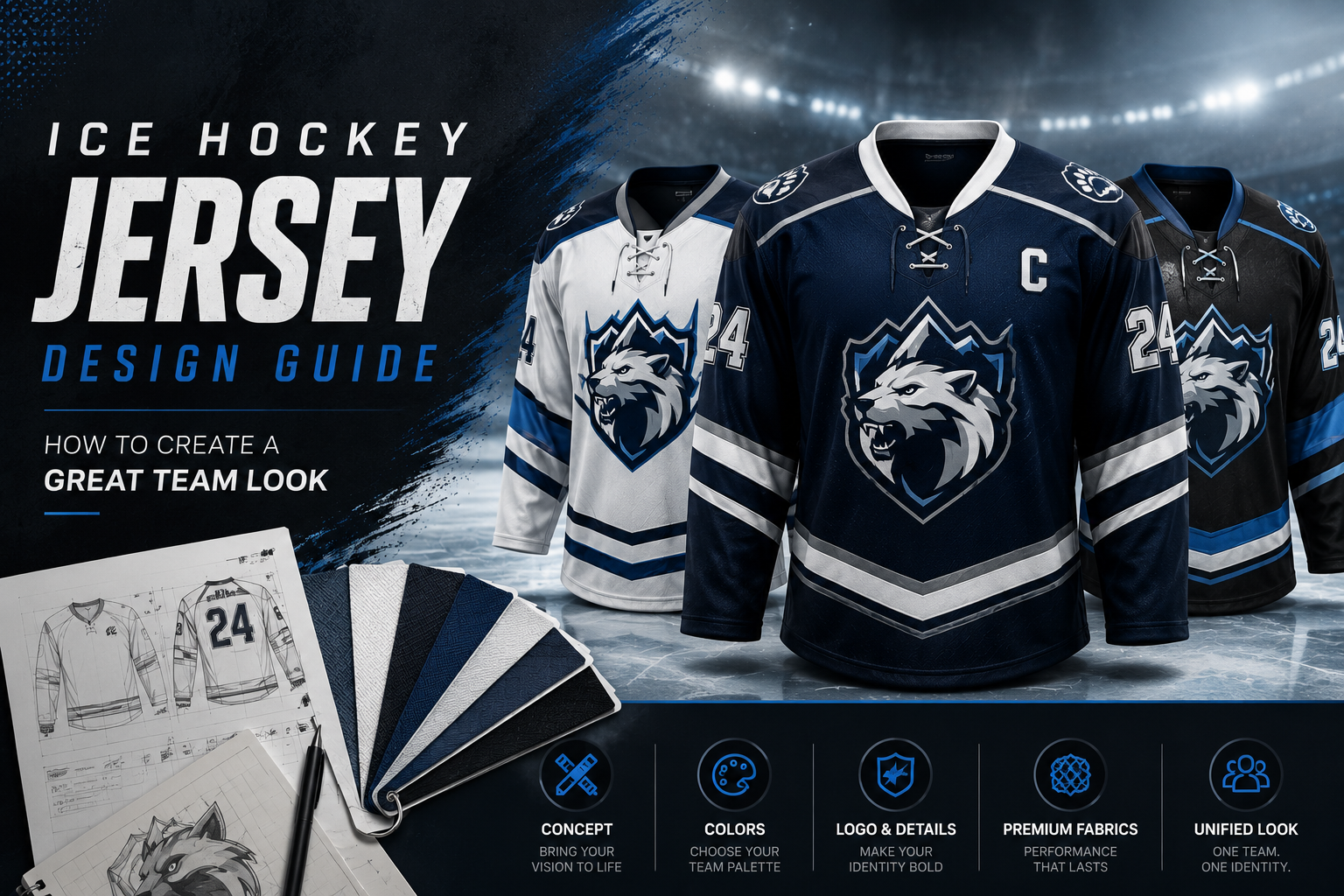
This is the part where things go sideways for a lot of teams. The instinct is to throw in every color the program’s ever touched — main colors, alternates, some accent someone liked on a Pinterest board. Don’t. A clean hockey jersey design almost always works off two or three colors, tops. One dominant, one accent, one neutral to balance it out.
Picture how the jersey reads from twenty rows up, under bright arena lights, moving at full speed. Load it with too many colors and it just turns into noise — the number gets harder to read, the crest disappears into the pattern. The best-looking programs at any level, junior or pro, tend to keep the palette simple and let the cut and the crest carry the design instead of a busy color scheme doing all the work.
Home and Away — Plan Both From the Start
Most leagues require two sets, a lighter home jersey and a darker away one, and this is worth thinking through early instead of bolting it on after the fact. The away version doesn’t need to be a totally separate design — often it’s just the home layout with the primary and background colors swapped. Keep the numbers, crest size, and sleeve pattern consistent between the two, and the whole set ends up looking like it was actually planned rather than improvised at the last minute.
Fit Matters More Than People Expect
A jersey can look great in a mockup and still feel wrong the second a player puts it on over their gear. Hockey jerseys need real room through the shoulders and chest to sit over shoulder pads and elbow pads, so sizing based on regular street clothing just doesn’t work here. A true hockey cut — wider through the arms, longer through the torso — sits properly instead of riding up mid-shift. If you’re outfitting a full ice hockey uniform set, get actual measurements taken over the pads, not jersey sizes pulled off some generic chart that was probably built for a different sport entirely.
Where First-Time Custom Orders Usually Go Wrong
A few patterns keep showing up with teams ordering their first custom ice hockey jersey set. People approve a design without actually checking it line by line against the roster — names, numbers, spelling — and end up with mistakes baked into forty jerseys before anyone notices. Others go with the cheapest fabric available to save a little money, then find themselves reordering the whole set a year later because it didn’t hold up. And more than a few programs skip planning the away jersey entirely, then scramble mid-season when a scheduling conflict forces a color clash nobody thought about.
The fix is mostly the same for all of it — get a real mockup before anything goes into production, compare it against your actual roster, and ask the supplier directly about fabric weight instead of assuming all polyester is the same. It isn’t. Jacx Wears builds full custom jersey and uniform sets for hockey programs, and if you want to see what a properly built set actually looks like before committing to anything, it’s worth browsing through the ice hockey uniforms lineup first.
Crests, Logos, and Numbers That Actually Read
The crest needs to work small, not just big. A lot of programs design something beautiful and detailed that looks amazing blown up on a screen, then it shrinks down onto the jersey chest and turns into a blurry mess nobody can make out from the stands. Test it small before locking anything in — that one step saves a lot of regret later. Numbers should be bold, high-contrast against the background, and the same size and font across the whole roster, not slightly different from jersey to jersey because two batches got ordered a year apart. Names on the back are a nice touch for a custom hockey jersey, and they matter more than people expect, especially at the youth level where a kid genuinely treasures seeing his own name there.
How the Ordering Process Actually Goes
It starts with locking down identity — colors, crest, and whether you’re going twill or sublimation — before getting into specific styles or cuts. From there, a decent manufacturer sends over a digital mockup so you can see the real layout before anything gets produced. That step matters more than people give it credit for; it’s the difference between catching a spelling mistake on a screen versus finding it on forty finished jerseys. Once the mockup’s approved, confirm sizing across the full roster, including any adjustments for gear fit, then place the order with enough lead time. Quality hockey jerseys usually take a few weeks to produce, longer during peak season when every other team’s ordering at the same time you are.
Frequently Asked Questions
1. What’s a good starting point if I’ve never designed a jersey before?
Most manufacturers, Jacx Wears included, offer an ice hockey jersey design template you can build off of instead of starting from a blank screen — pick your colors, drop in your crest, and adjust from there.
2. How’s a men’s ice hockey jersey design different from other cuts?
Men’s jerseys are typically cut wider through the shoulders and chest so they sit right over shoulder and elbow pads, with more length through the torso than a regular athletic tee would have.
3. What actually separates a great jersey design from an okay one?
The best designs usually share three things — a simple two-to-three color palette, a crest that still reads clearly at a small size, and numbers with enough contrast to spot from a distance. Flashy and effective aren’t always the same thing.
4. Is a field hockey jersey design different from an ice hockey one?
Yes, quite a bit. Field hockey jerseys are lighter and more breathable, built for a different range of motion, since players aren’t wearing bulky pads underneath the way ice hockey players are.
5. Can I see my jersey in 3D before I actually order it?
A lot of suppliers now offer a 3D hockey jersey designer or at least a digital mockup tool, so you can get a real sense of color placement, crest size, and numbering before committing to a full production run.
6. What’s actually included in a full ice hockey uniform, besides the jersey itself?
A complete set usually covers the jersey, matching socks, and often a pant shell, with players supplying their own pads and protective gear to wear underneath.
7. How long does a custom hockey jersey order usually take?
Somewhere around 3 to 6 weeks depending on order size and design complexity. Best to place the order at least two months out from the season starting, just to be safe.
Final Thoughts
A great ice hockey jersey design isn’t about chasing trends or piling on extra graphics because they looked cool on a mockup. It’s fabric that survives contact, a fit that actually sits right over the pads, colors that still read clearly from the stands, and a crest that holds up at a small size instead of turning into mush. Whether you’re outfitting a single team or a whole youth program with matching ice hockey uniforms, the time spent getting these basics right up front is what makes a team actually look — and feel — like a team. If you’re ready to put something together, Jacx Wears works directly with hockey programs across the US on custom jerseys and full uniform sets. You can get in touch here to start that conversation.