


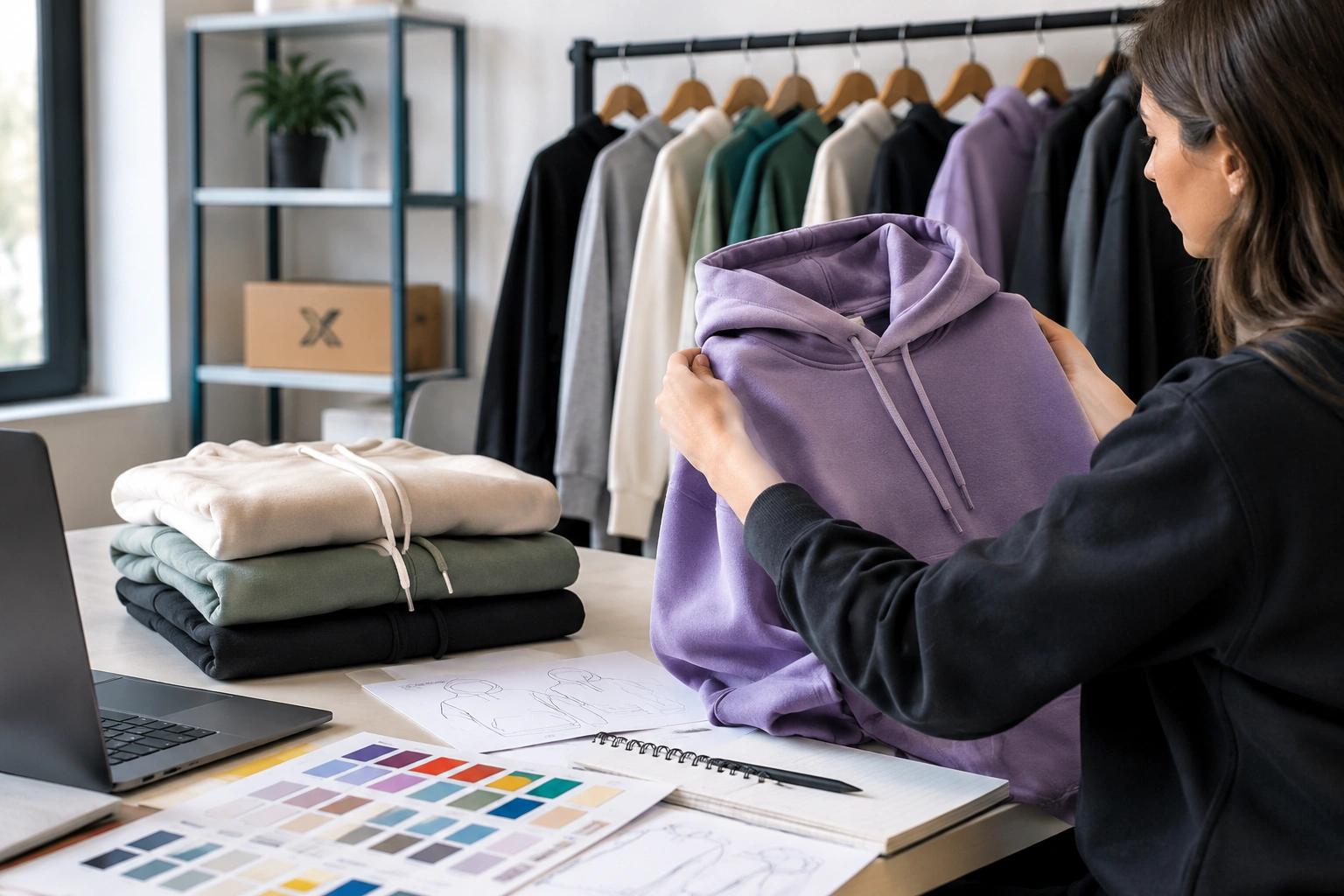
Targeting the women’s streetwear and athleisure market requires more than just scaling down men’s sizing patterns. For independent apparel brands, corporate buyers, and boutique label owners, finding high-quality custom women’s hoodies without being forced into massive 500-piece minimums is a major operational hurdle.
From fabric GSM selection to choosing the right decoration methods, this guide breaks down how to navigate custom hoodie manufacturing while keeping risk low and quality high.
1. The Anatomy of a True Women’s Fit vs. Unisex Cuts
Ordering standard unisex hoodies for a targeted women’s line often leads to poor customer retention.
- The Fit Dilemma: Unisex hoodies follow men’s sizing blocks resulting in dropped shoulders that look boxy, extra fabric in the waist, and restrictive tight bands at the hip.
- The Custom Solution: Opt for tailored women’s patterns. True custom women’s hoodies feature contoured side seams, refined shoulder drops, proportional sleeve lengths, and balanced hem widths designed for clean layering.
2. Selecting the Perfect Fabric Weight (GSM) & Blend
Fabric texture dictates perceived product value. Depending on your collection’s release season, choosing the right material composition is critical:
| Fabric Type | Weight (GSM) | Best Use Case | Key Features |
| Heavyweight Fleece | 300 – 350 GSM | Autumn/Winter Collections | 80% Cotton / 20% Poly blend, ultra-soft brushed interior |
| Midweight French Terry | 260 – 280 GSM | Year-Round & Athleisure | Breathable loop-back structure, high moisture-wicking |
| Organic Cotton Terry | 300 GSM | Eco-Friendly Premium Lines | Zero synthetic feel, smooth surface for clean printing |
3. High-Impact Custom Branding Techniques & Application Guide
Your logo application method dictates your apparel’s perceived market value, aesthetic finish, and structural durability. Here is a detailed breakdown so B2B buyers and brand managers can evaluate and select the ideal custom execution for their collection:
A. 3D Puff Screen Printing (Raised Tactile Finish)
- How It Works: A special foaming agent is mixed into standard plastisol screen printing ink. When heat-cured, the ink swells upward, creating a clean, raised 3D dimensional effect on the fabric surface.
- Best Uses: Bold typography, large chest graphics, oversized back prints, and modern streetwear aesthetics.
- Durability & Care: Maintains sharp edges for 50+ wash cycles when washed inside-out in cold water. Avoid direct high-heat ironing over the print.
- Value Profile: Cost-effective for medium-to-large bulk production runs while adding an estimated $1.50–$2.50 per unit in perceived retail value compared to flat prints.
B. High-Density & Direct Embroidery (Premium Classic Finish)
- How It Works: Industrial multi-needle embroidery machines apply dense thread stitching directly onto the fleece panel prior to garment assembly. Options range from flat precision embroidery to 3D foam-backed raised stitching.
- Best Uses: Left-chest branding, sleeve cuffs, hood side-panels, and minimalist luxury aesthetics.
- Durability & Care: Ultra-durable performance. Embroidery easily outlasts the lifespan of the garment itself, withstanding warm wash cycles and heavy tumble drying without fading or fraying.
- Value Profile: Pricing is calculated by total stitch count. It offers the highest ROI on small left-chest logos and subtle brand hits.
C. Custom Tech Packs, Neck Labels & Trimmings (Full Private Labeling)
- How It Works: Factory-level detailing integrated directly during the cut-and-sew manufacturing process:
- Tagless Screen-Printed Neck Labels: Replaces scratchy traditional woven labels with smooth, printed size, care instruction, and fabric specs directly inside the collar.
- Custom Woven/Satin Labels: Stitched main neck labels and outer seam flags that establish distinct brand authenticity.
- Branded Drawstrings & Hardware: Custom-engraved metal aglets (tips), silicone-dipped flat cords, and branded metal eyelets that turn a standard hoodie into a bespoke retail garment.
- Value Profile: Adds nominal unit costs ($0.30–$0.80 per unit) while boosting end-consumer retail pricing power by 30% to 40%.
4. Overcoming Manufacturing Bottlenecks with Low MOQs
Traditional garment factories enforce high Minimum Order Quantities (MOQs), binding up vital capital in untested inventory.
To scale efficiently:
- Partner with Flexible Manufacturers: Look for suppliers offering low 10-piece MOQs per colorway, allowing you to launch multiple styles without financial risk.
- Require Pre-Production Samples: Always inspect physical samples or custom tech pack proofs before approving bulk runs.
- Speed to Market: Choose suppliers with 12–15 day production cycles and express DDP air shipping to maintain rapid stock replenishment.
Final Thoughts
Building a profitable women’s hoodie line comes down to precision pattern making, premium fabric selection, and flexible supply chain management. By focusing on tailored fits and low-friction manufacturing, you protect your cash flow while delivering retail-grade quality.
At JACX Wears, we specialize in manufacturing custom women’s fleece pullovers, full-zip hoodies, and cropped fleece cuts—tailored precisely to your specs with flexible 10-piece MOQs and fast turnarounds.
The content is really great