
Table of Contents
Starting a streetwear or activewear brand looks simple on Instagram: a logo, a few mockups, a drop, and a sold-out collection. The reality is different. Behind every successful launch is a sourcing decision that either makes the brand scalable — or quietly kills the margins before year one is over.
If you’re a founder, sports director, or startup team asking how to create a custom sportswear line that actually holds up in production, this guide breaks down the entire B2B sourcing process: manufacturer types, MOQs, costs, legal basics, and how to pick a custom clothing manufacturer who won’t leave you re-ordering samples for six months.
Why 2026 Is a Different Market for New Apparel Brands
The custom apparel space has split into two very different lanes.
On one side you have print-on-demand platforms — think Printful or Custom Ink — built for creators who want to sell a handful of hoodies with no upfront cost and no inventory risk. On the other side you have full OEM/ODM manufacturers who build a brand’s actual product line: custom patterns, fabric selection, private labels, and bulk production at a real per-unit cost advantage.
Most new founders start in the first lane and outgrow it within a year. Understanding both lanes — and where the line between them sits — is the single most useful thing you can learn before spending a dollar on production.
Private Label vs. White Label vs. Custom Cut & Sew
These three terms get used interchangeably online, but they mean very different things to your budget and your brand identity.
White label clothing is a manufacturer’s existing blank product (a stock hoodie or tee) that you simply add your logo to. Fast, cheap, but your product is identical to everyone else’s using the same blank.
Private label clothing manufacturers go a step further — you can adjust fit, fabric weight, colorways, and trims on an existing base pattern, then apply your own woven labels, hang tags, and packaging. This is the sweet spot for most emerging streetwear and activewear brands: enough customization to build a real identity across a full private label casual wear and streetwear catalog, without the cost of designing every pattern from zero.
Custom cut & sew means building a garment from scratch — your own pattern, your own spec sheet, your own fit. This is where premium sportswear and performance activewear brands eventually land, because compression fit, seam placement, and technical fabric performance can’t be achieved on a stock block.
Most brands should start with a private label and graduate into cut & sew once a style proves it sells.
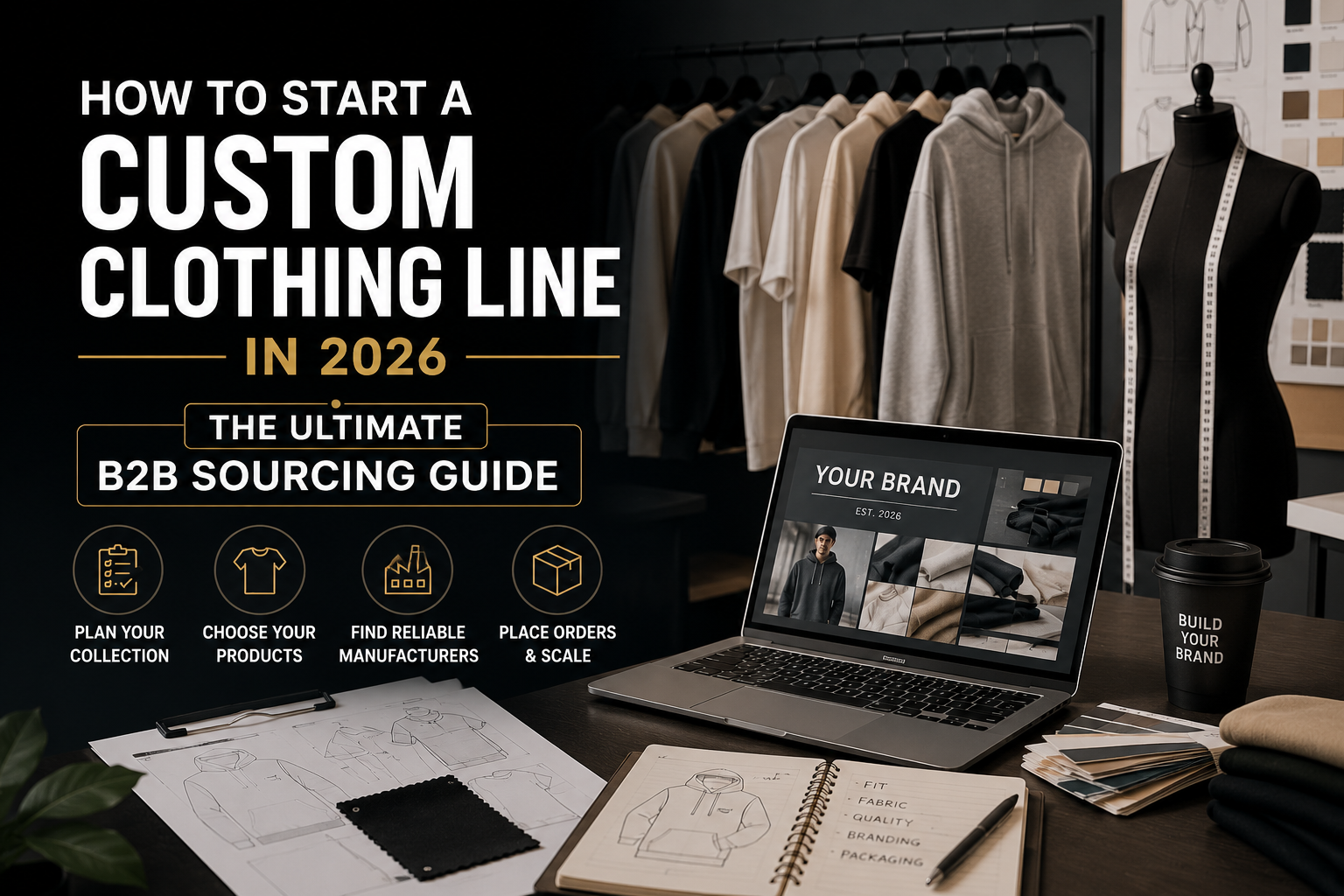
How to Create a Custom Sportswear Line: The Step-by-Step Process
1. Define Your Product Category and Fit Profile
Sportswear and activewear buyers care about performance details generic streetwear doesn’t: moisture-wicking fabric, four-way stretch, flatlock seams, breathability zones. Decide early whether you’re building gym wear, teamwear, running gear, or crossover athleisure — this determines fabric GSM, blend ratios, and construction.
2. Build a Simple Tech Pack
You don’t need a fashion degree to start a tech pack — you need measurements, fabric specs, colorways, and reference images. A manufacturer that offers free tech pack support and a quote consultation (rather than requiring you to hire a pattern maker first) removes the single biggest barrier for startup founders.
3. Choose Between Sample-First or Bulk-First Manufacturers
Never skip sampling, regardless of how confident you are in your design. A manufacturer that pushes straight to bulk production without a physical sample approval step is a red flag, not a shortcut.
4. Understand MOQ Before You Fall in Love With a Factory
MOQ (minimum order quantity) is the number that will make or break your launch budget. This is where the market splits sharply:
- Big factories in China, Bangladesh, and Turkey typically require 300–1,000 units per style — unrealistic for a first collection.
- Print-on-demand platforms (Printful, Printify) offer zero MOQ but at 2–4x the per-unit cost, and thinner customization — fine for testing a design, not for building margin.
- Boutique OEM manufacturers, particularly in Pakistan, increasingly offer 50–100 unit MOQs per style with full private label branding included — the realistic middle ground for a startup that wants real margins without a five-figure upfront commitment.
If you’re a UK-based gym brand searching for unbranded gym clothing wholesale UK suppliers to relabel, know that most “wholesale blank” suppliers only offer white labels, not the fit or fabric customization sportswear brands actually need long term. It’s usually cheaper — and more brand-defining — to source private label activewear directly from a manufacturer than to buy blanks and outsource relabeling separately.
5. Lock Fabric and Trims Before Costing
Fabric is 40–60% of your per-unit cost. Confirm composition (cotton, poly-cotton, performance poly-spandex blends), GSM weight, and finish (peached, brushed, French terry) before your manufacturer quotes a final price — vague fabric specs are the #1 cause of quote disputes later.
6. Confirm Labelling, Packaging, and Compliance
Woven neck labels, care labels compliant with your destination market (UK/EU/US labelling laws differ), hang tags, and polybag or branded packaging should be quoted as part of the unit price — not billed separately after the fact. This applies across every category, from basic tees to premium outerwear like custom bomber jackets built for team and streetwear branding.
7. Plan Shipping and Landed Cost, Not Just Factory Price
A cheap FOB (Free on Board) quote can become expensive once duties, freight, and customs clearance are added. Ask any manufacturer for a landed cost estimate to your country before comparing quotes.
Can I Create Apparel for My Brand? What Startups Get Wrong
Yes — legally, almost anyone can commission apparel under their own brand name, provided you’re not copying a protected design, logo, or trademarked pattern (like a licensed sports league crest). The real question founders should ask isn’t can I, but should I own the production relationship, or rent it through a platform?
Owning the relationship (private label / OEM manufacturing) gives you:
- Control over fit, fabric, and quality consistency
- Real margin at volume (typically 2–3x better than print-on-demand at scale)
- A defensible product, not a decorated blank anyone else can also buy
Renting it (print-on-demand) gives you speed and zero risk, but caps your margin and your differentiation — because your competitor can use the exact same blank.
DIY Print-on-Demand vs. Full OEM Manufacturing
| | Print-on-Demand (Printful, Custom Ink) | Domestic Wholesale Blanks | Full OEM/Private Label (e.g., Jacx Wears) | |—|—|—| | MOQ | 1 unit | Usually case packs (6–12) | 50–100 units/style | | Customization | Print/embroidery on stock blank | Print/embroidery on stock blank | Fabric, fit, labels, packaging, trims | | Per-unit cost at scale | High | Medium | Low | | Brand ownership | Shared blank, low differentiation | Shared blank | Fully owned product line | | Best for | Testing a design, low volume | Local reselling | Building an actual brand |
Print-on-demand platforms like Printful are genuinely useful for validating a design before committing a budget. Custom Ink is strong for one-off team or event orders. But neither is built for a brand that wants to own its fit, fabric, and margin structure long term — that’s where a dedicated OEM manufacturing partner comes in.
Why Pakistan Has Become a Serious Sourcing Destination
Pakistan sits in a sourcing sweet spot most founders haven’t discovered yet: it’s one of the world’s largest cotton and denim producers, has decades of export-grade garment manufacturing experience (much of it supplying major European and US retailers), and offers significantly lower per-unit costs than Turkey or the US without the 300+ unit MOQs typical of China or Bangladesh.
For founders specifically researching a custom clothing line in Pakistan, custom clothing line Karachi, or general custom clothing Pakistan sourcing options, the appeal is straightforward: English-speaking B2B teams, DDP (Delivered Duty Paid) shipping to the US/UK/EU, and factories that are increasingly set up to work with low-MOQ startup brands rather than only enterprise retailers.
Choosing a Manufacturer for Startups: A Quick Checklist
Before you commit, verify a custom clothing manufacturer can answer these clearly:
- What’s the real MOQ per style, and is private label branding included at that MOQ, or is it an upsell?
- Do they provide free tech pack support, or do you need your own pattern maker?
- Is sampling included, and how many revision rounds before bulk approval?
- What’s the landed cost to your country, including duties and freight — not just the factory quote?
- Can they show verified production for other sportswear/streetwear brands, not just generic blanks?
Clothing manufacturers for startups that can’t give a straight answer to landed cost or MOQ inclusions are usually the ones that surprise you with hidden fees at bulk stage.
Frequently Asked Questions
What is the minimum order quantity to start a custom clothing line?
It depends on the manufacturer type. Print-on-demand platforms have no minimum but higher per-unit costs. Most low-MOQ OEM manufacturers, including several based in Pakistan, now offer 50–100 units per style with full private label branding included — a realistic starting point for most startup brands.
Is a custom clothing line in Pakistan a good option for US/UK/EU brands?
Yes. Pakistan offers export-grade garment manufacturing experience, competitive per-unit costs, and increasingly low-MOQ options built for startups — combined with DDP shipping that removes most of the customs complexity for founders outside the region.
How do I find a reliable custom clothing line in Karachi or elsewhere in Pakistan?
Look for manufacturers with verifiable production history, transparent MOQ and landed-cost quoting, in-house tech pack and fabric sourcing support, and clear communication in English. Ask for sample production before committing to bulk, regardless of how established the factory claims to be. You can read more about what to look for in custom clothing manufacturers in Pakistan before reaching out for quotes.
What’s the difference between custom clothing design and custom clothing manufacturing?
Custom clothing design covers the creative side — patterns, fits, colorways, and artwork. Manufacturing is the production side — sourcing fabric, cutting, sewing, printing/embroidery, and quality control. A full-service OEM partner typically supports both, while design-only studios or platforms hand off production separately.
Can I create apparel for my brand without owning a factory?
Yes — this is exactly what private label and OEM manufacturing partnerships are for. You control the design, fit, and branding; the manufacturer handles production, fabric sourcing, and compliance. You never need to own equipment or a factory floor to launch a legitimate apparel brand.
Is it better to start a custom clothing line online through a platform or work directly with a manufacturer?
Online platforms (print-on-demand) are useful for testing a design at zero risk. Once a design proves demand, working directly with a manufacturer typically cuts per-unit costs significantly and lets you own fit, fabric, and packaging — the elements that actually build brand loyalty beyond a logo print.
What should unbranded gym clothing wholesale UK buyers know before switching to private label?
Wholesale blanks are cheaper per unit upfront but offer no control over fit or fabric — meaning your product is identical to any other reseller’s. Private label manufacturing costs slightly more initially but lets you customize fit, fabric weight, and labelling, which is what separates an actual gym wear brand from a relabeled blank. Request a private label quote to compare real per-unit costs against your current wholesale supplier.
Start Your Line the Right Way — With Jacx Wears
Jacx Wears works as an OEM/private label manufacturing partner for emerging streetwear and activewear brands in the US, UK, and EU — handling tech packs, fabric sourcing, low-MOQ private label production, labelling, and DDP shipping under one roof, so you’re not stitching together five vendors to launch one collection. Browse the full range of sportswear, casual wear, and fitness wear categories to see what’s possible at low MOQ.
If you’re ready to move from mockups to an actual production run, get a free quote and tech pack consultation from Jacx Wears and see what a real per-unit cost looks like for your first collection.