


Table of Contents
Here’s a scene a lot of brand owners know too well. You find a manufacturer, send a deposit, and then… silence. Or worse, you get a sample back that looks nothing like what you agreed on, and now you’re three weeks behind on a launch you already promoted on Instagram.
That’s not bad luck. It’s what happens when you’re trying to build a modern brand on top of an old, creaky sourcing system. And the good news, if there is one, is that the whole system is being rebuilt right now, not slowly, but fast, and mostly for the better.
The garment industry is in the middle of a genuine shift. The old playbook- manufacture everything cheap in one country, ship it in massive containers, sell it through a few big retailers doesn’t really hold up anymore. Tariffs keep moving the goalposts. Shoppers are asking harder questions about where their clothes actually come from. And a huge chunk of new brands are being built entirely online, without ever setting foot in a factory or a trade show.
If you’re paying attention to where things are heading, 2026 looks less like a year of uncertainty and more like a genuinely good window to get in early, whether you’re launching a brand, scaling one, or you’re a manufacturer trying to catch buyers before your competitors do.
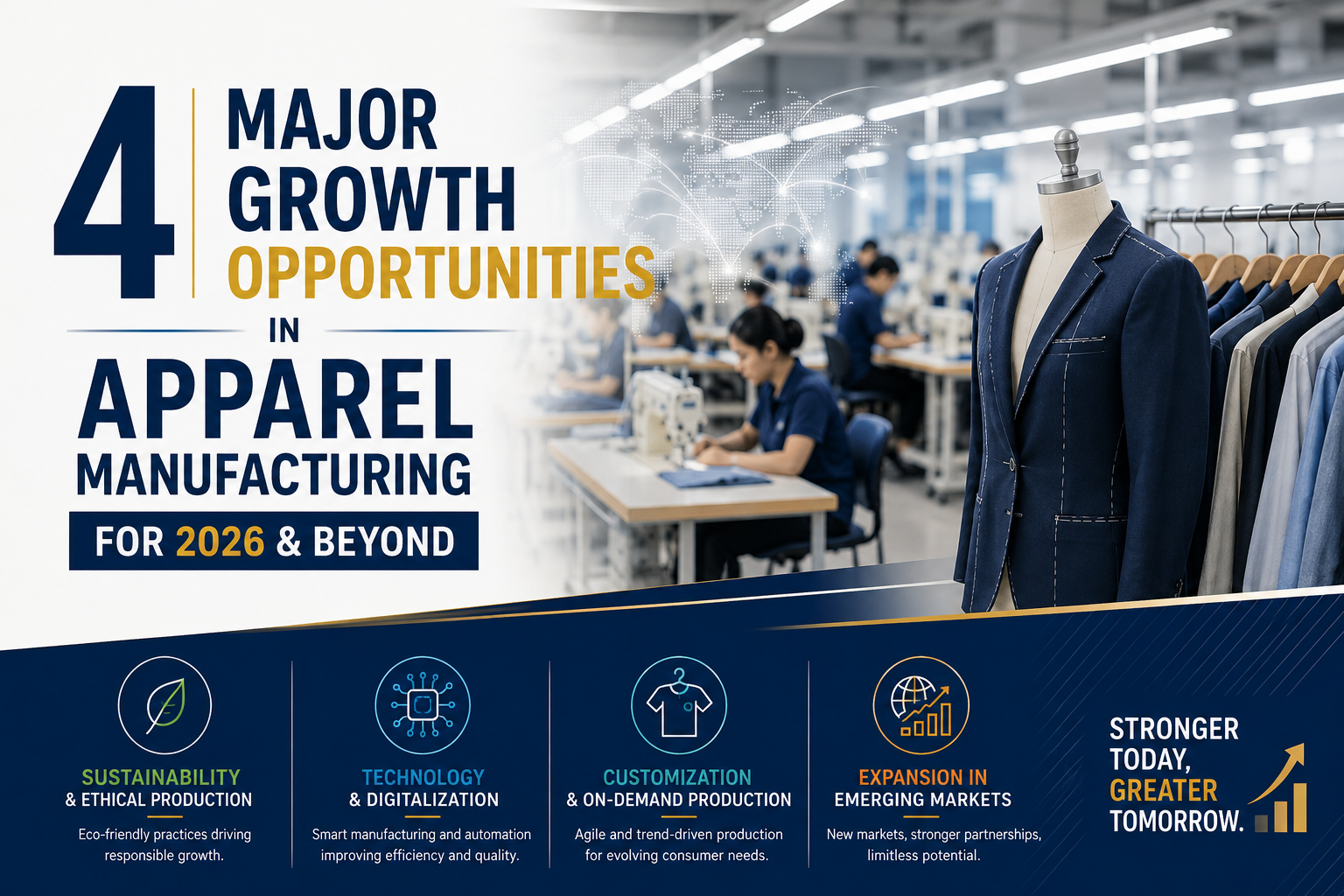
This piece walks through the four apparel manufacturing opportunities worth knowing about right now, the broader garment industry trends behind them, and what it actually takes to position yourself or your brand to benefit instead of getting steamrolled by the change.
So, What’s Actually Changing in the Garment Industry?
For a long time, apparel ran on a pretty simple formula. Pick one or two manufacturing hubs, produce in bulk, sell through department stores or mass retailers, repeat. It worked fine when nothing else was changing around it.
But a few things happened at once. Brands got nervous about putting all their production in one country after tariff swings made costs unpredictable overnight. Governments in emerging manufacturing regions, the Gulf, South Asia, parts of Southeast Asia, started actively courting garment producers with tax breaks and faster business setup, because textiles are still one of the most reliable ways to create jobs and bring in export revenue. And on the buyer side, consumers stopped being satisfied with “made somewhere, by someone.” They want to know, or at least feel like they can find out if they cared to look.
Layer on top of that a shopping culture that’s moved almost entirely online, plus a genuine, non-hype boom in athletic and performance wear, and you end up with an industry where speed and adaptability matter more than sheer size. The manufacturers and brands who read this correctly are the ones setting the pace. Everyone else is playing catch-up.
Here’s where that’s showing up most clearly.
1. Sustainable Clothing Manufacturing Isn’t Optional Anymore
A few years ago, “sustainable” on a clothing tag was mostly a marketing choice. Now, especially if you’re selling into the EU or the US, it’s closer to a requirement. European regulators are tightening rules around textile waste and recycled content, and American shoppers — particularly younger ones — have gotten noticeably better at spotting greenwashing and calling it out.
Here’s the part that’s easy to miss: sustainable clothing manufacturing isn’t just a compliance box to tick. Done properly, it actually helps the bottom line.
Garments made with better fabrics and cleaner construction tend to come back less — fewer quality complaints, fewer returns eating into margin. Customers will genuinely pay more for a product they trust was made responsibly, even in categories like basic tees and casualwear where price is usually the deciding factor. And more wholesale buyers and marketplaces are quietly filtering out suppliers who can’t answer basic questions about their fabric sourcing or waste handling.
In practice, this means organic and recycled fabric options, dyeing processes that don’t waste absurd amounts of water, cutting techniques that leave less on the factory floor, and — maybe most importantly — being honest about what you can and can’t verify. A manufacturer who says “we’re 100% sustainable” with nothing to back it up is a red flag, not a selling point.
If your current supplier can’t give you a straight answer on any of this, that’s worth a second look. It’s part of why brands sourcing internationally increasingly work directly with manufacturers like JACX Wears who can walk you through fabric sourcing rather than just repeating a slogan.
2. Custom Sportswear Demand Is Quietly Exploding
Athleisure stopped being a trend around the time everyone realized they were never going back to stiff, uncomfortable “real clothes” full time. The line between gym wear and everyday wear basically doesn’t exist anymore, and that’s driving a real surge in custom sportswear demand from gyms and sports clubs to corporate wellness programs to small e-commerce activewear labels trying to look like more than a dropshipping store.
What’s interesting is how specific the demand has gotten. Buyers aren’t asking for generic t-shirts anymore. They want:
- Performance fabrics — moisture-wicking, four-way stretch, the kind that doesn’t smell after one gym session
- Compression gear and team kits with custom sublimation printing that actually holds up after washing
- Small-batch, made-to-order sportswear for niche fitness communities that don’t need 5,000 units of anything
- Private-label activewear for e-commerce brands who want their own look, not a stock design with a logo slapped on
The brands doing well here usually aren’t the biggest ones. They’re the ones who found a manufacturer that can actually handle technical fabrics and custom branding without demanding a six-month lead time and a huge minimum order. If you’re building or sourcing for a sportswear line right now, this is one of the better-timed opportunities in the entire industry — and it’s one area where JACX Wears has spent real time getting the fabric and printing side right, precisely because so many manufacturers still treat sportswear as an afterthought.
3. E-commerce Apparel B2B Has Quietly Rewritten the Rules
Something changed in how clothing actually gets bought and sold, and most people barely noticed it happening. A large share of newer brands never go anywhere near a traditional trade show or a department store buyer’s desk. They launch, source, and scale entirely through e-commerce apparel B2B channels — direct relationships with manufacturers, found and negotiated almost entirely online.
This cuts both ways, and honestly, it’s mostly a good thing for smaller players.
If you’re a brand owner, it’s now genuinely realistic to work with a manufacturer on the other side of the world, handle everything through messages and calls, and get samples back in weeks instead of months. You don’t need a massive sourcing team or a six-figure budget to access real manufacturing capability anymore; that used to be a serious barrier, and it mostly isn’t now.
If you’re on the manufacturing side, being able to serve hundreds of small and mid-sized brands directly online, instead of chasing two or three massive wholesale contracts, spreads the risk out and, more often than not, produces better margins per relationship.
The manufacturers doing this well share some habits: they answer messages fast, they’re upfront about MOQs and pricing instead of making you dig, they turn samples around in days rather than months, and they don’t treat a 50-unit starter order like it’s beneath them. If you’re building a direct-to-consumer apparel brand, this shift is genuinely one of the biggest things working in your favor right now.
4. Brands Are Actively Moving Away from the Old Fast Fashion Supply Chain
The traditional fast fashion supply chain — cheap, fast, volume above everything else is under real pressure from a few directions at once. Regulation is tightening. Labor and shipping costs have crept up in some of the traditional production hubs. Tariffs keep shifting without much warning. And a growing number of shoppers now associate “fast fashion” with cheap, disposable, and slightly embarrassing to be seen wearing.
That pressure is pushing a lot of brands toward something in between — manufacturing partners who can still move fast and price competitively, but without the reputational and quality baggage that comes with the old fast-fashion model. This is basically what people mean when they talk about “diversifying” or “nearshoring” a supply chain: spreading production across a few different regions instead of betting everything on one hub, partly to manage risk and partly to cut down shipping time to markets like the US and Europe.
For manufacturers outside the handful of traditional mega-hubs, this is a real growth window, not just a talking point. Brands are actively looking for a reliable second or third manufacturing partner, not necessarily to drop their existing supplier overnight, but to stop being completely dependent on one. If you can offer solid pricing, honest lead times, and consistent quality, 2026 is a good year to get noticed.
Okay, So How Do You Actually Pick a Manufacturing Partner?
All four of these opportunities only actually pay off if you’re working with the right people on the production side. A few honest questions worth asking before you commit to any manufacturer, wherever you’re based — Los Angeles, London, Berlin, doesn’t matter:
- Can they show you real sourcing details, not just tell you it’s sustainable and expect you to nod along?
- Do they actually have experience with technical or performance fabrics, if sportswear is part of what you’re building?
- What’s their real MOQ and sample turnaround, and does it match how you’re actually planning to launch or grow?
- How fast and clearly do they communicate? If it takes a week to get a straight answer on pricing now, that’s a preview of what your entire production relationship will feel like.
- Can they scale with you: from a first small order to a much bigger reorder — without renegotiating the entire relationship from zero?
This is more or less the exact gap JACX Wears was built to close. Small first orders get treated with the same seriousness as bigger wholesale reorders, sourcing questions get real answers instead of marketing lines, and both everyday apparel and sportswear are handled by people who’ve actually done it before — not figured out on your dime.
If you’re weighing up manufacturers right now, it’s worth just talking to someone before you decide anything. Reach out to JACX Wears and ask the hard questions about your product, your quantities, and your timeline. If we’re not the right fit, we’ll tell you that too.
Frequently Asked Questions
How do I get a clothing manufacturer?
Start by getting specific about what you’re actually making — knitwear, wovens, sportswear, accessories because very few manufacturers do all of it equally well. From there, shortlist based on their sample process, minimum order quantity, how fast and clearly they communicate, and whether they can back up quality or sourcing claims with something real instead of a slogan. Always request a sample before a bulk order, and pay attention to how that process goes; it’s usually a fair preview of how your real production run will feel. Reaching out directly to a manufacturer’s team, like the one at JACX Wears, and asking specific questions tends to get you further, faster, than scrolling through directory listings.
What is apparel manufacturing?
Apparel manufacturing is the process of turning raw materials — fabric, thread, trims, accessories — into finished clothing that’s ready to sell, whether that’s retail or wholesale. It covers pattern-making, cutting, sewing, printing or embroidery, quality checks, and finishing. It happens at every scale, from small workshops doing custom, made-to-order pieces to large factories running high-volume production for global brands.
Which country is No. 1 in the garment industry?
China is still the biggest garment producer and exporter by total volume, but that’s not the full story anymore. Bangladesh, Vietnam, and India have all grown into serious export players in their own right, and more buyers are deliberately spreading their sourcing across a few countries instead of depending entirely on one — mostly to manage cost and tariff risk more sensibly than putting everything in one basket.
Which clothing business is most profitable?
Honestly, it usually comes down to how narrow and clear your niche is, more than the category itself. Private-label and custom sportswear, sustainability-focused clothing lines, and specialized activewear tend to hold stronger margins than generic basics — mostly because people are willing to pay more when they trust the quality or the brand’s story. Businesses that pair a clear niche with a manufacturing partner who keeps quality steady and lead times predictable are usually the ones that stay profitable, rather than the ones chasing one good quarter.
Final Thoughts
2026 isn’t really a year to sit back and watch the garment industry change around you. Sustainable manufacturing, custom sportswear, direct B2B sourcing, and moving away from old-school fast fashion aren’t passing trends; they’re becoming the baseline for any brand that actually wants to compete in the US and European markets. The people who move now, with a manufacturing partner who actually has their back, are the ones who’ll be setting the pace by the time everyone else catches on.
Still deciding who to trust with production? Get in touch with JACX Wears and get a straight answer on pricing, samples, and timelines — no runaround, no vague promises.