
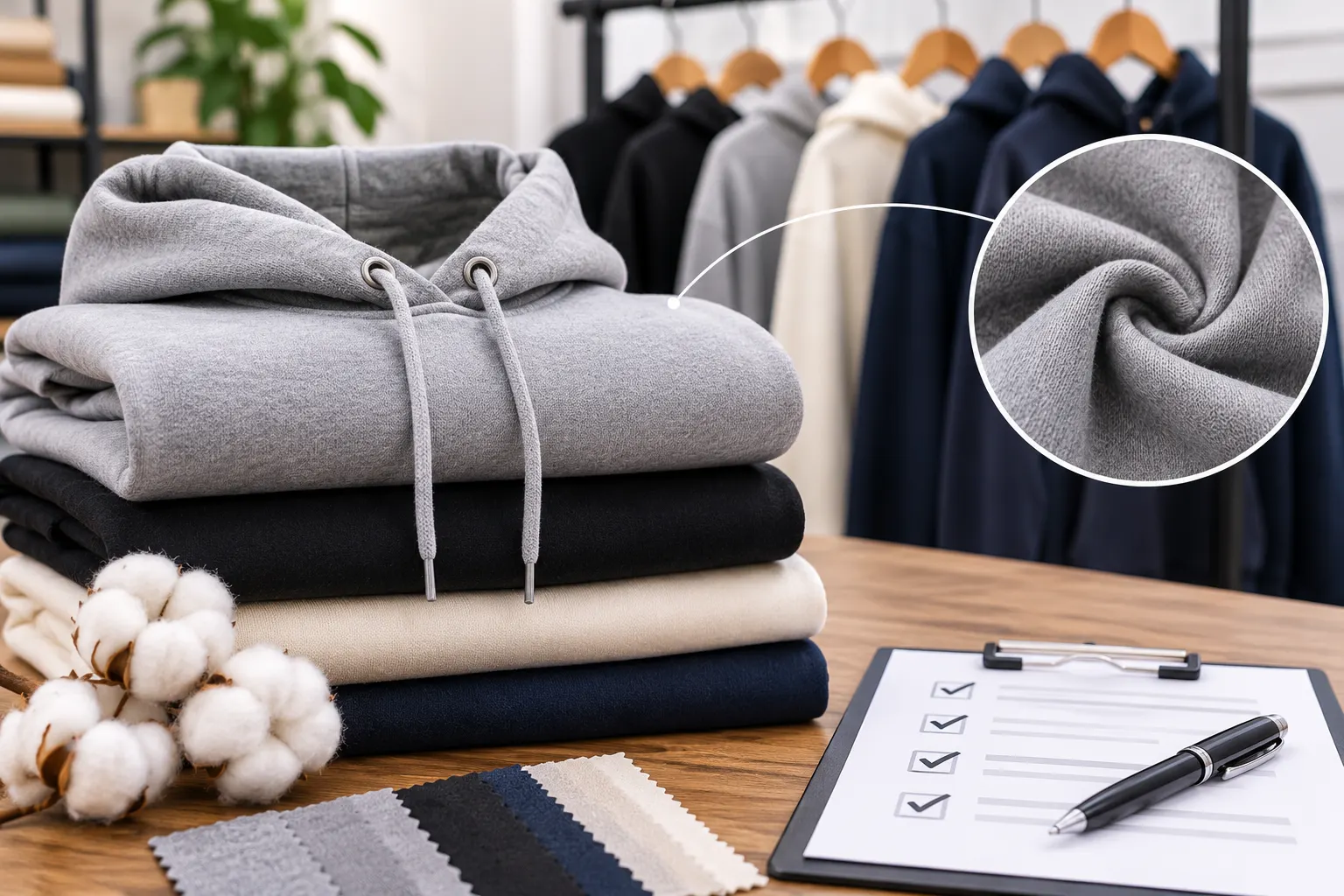
If you’re sourcing cotton hoodies wholesale for the EU or the US, the fabric decision is where most orders are won or lost. Get it right and your customers keep coming back. Get it wrong and you’re dealing with shrunken sleeves, pilled cuffs, returns and angry emails.
The problem is that fabric talk gets confusing fast. GSM, fleece, French terry, combed, brushed, pre-shrunk. Suppliers throw these words around and many buyers just nod along.
This guide cuts through that. Every section below starts with a straight answer, then gives you the detail you need to brief a factory properly.
Quick Answers (If You’re in a Hurry)
- Best all-round GSM for retail hoodies: 300 to 350 GSM.
- Best for premium or streetwear: 380 to 450 GSM.
- Best for budget, promo or team orders: 240 to 300 GSM.
- Cotton vs fleece blend: 100% cotton feels softer and more premium. A cotton/polyester fleece blend shrinks less, holds shape longer and usually costs less.
- Expected shrinkage: untreated cotton can shrink 3 to 5% or more after washing. Pre-shrunk or compacted cotton and blends typically stay within about 3 to 5%. Set the limit in writing.
- Smart first order: 20 to 50 pieces per style, approve a pre-production sample, then scale.
1. What GSM Should I Choose for Wholesale Hoodies?
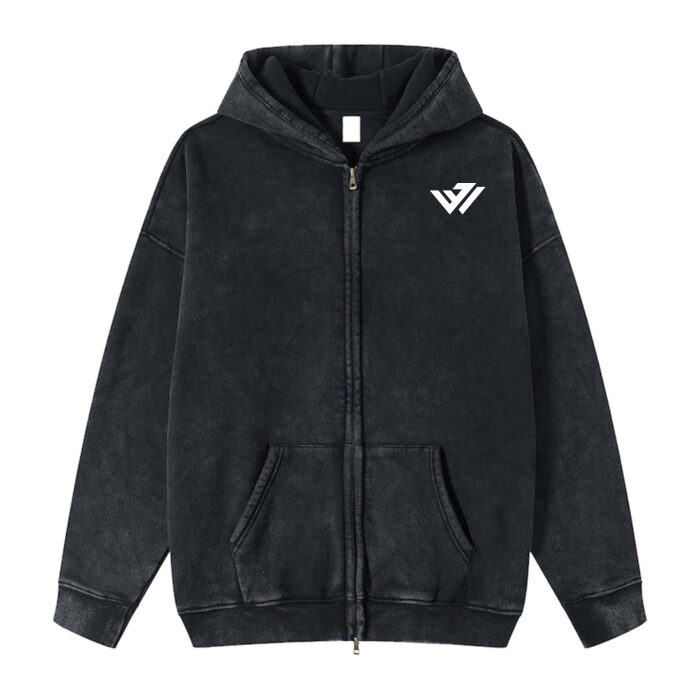
For most retail and private label brands, 300 to 350 GSM is the sweet spot. Go heavier (380 to 450 GSM) if you’re selling premium or streetwear, and lighter (240 to 300 GSM) for budget or promotional orders.
GSM means grams per square meter. It measures how heavy the fabric is, not how good it is. A higher GSM usually means a thicker, warmer, more structured hoodie, but it also means higher fabric cost, more shipping weight and a stiffer feel.
Here’s a practical guide:
| GSM range | Weight | Best for | Notes |
| 180 to 240 | Lightweight | Summer layers, promo giveaways | Thin feel, lower cost, less insulation |
| 240 to 300 | Light-midweight | Budget retail, uniforms, school and team wear | Good value, easy to ship |
| 300 to 350 | Midweight | Most retail brands, everyday hoodies | Best balance of feel, durability and price |
| 350 to 450+ | Heavyweight | Streetwear, premium private label, winter | Structured, durable, higher cost |
Three GSM mistakes buyers make:
- Only writing “heavy” in the brief. Heavy means different things to different people. Always give a number.
- Not agreeing a tolerance. A tolerance of about ±5% is common. Confirm it before production, not after.
- Judging weight by hand feel alone. Brushing and finishing can make a lighter fabric feel plusher. Ask for the actual GSM on the spec sheet.
For US buyers: Heavier hoodies tend to do better in colder states and in streetwear markets. For EU buyers: Many European customers appreciate midweight options for layering across a long spring and autumn, so 300 to 350 GSM often works year-round.
2. Cotton vs Fleece Blend: Which Is Better for Bulk Orders?
Choose 100% cotton if softness, breathability and a natural feel matter most. Choose a cotton/polyester fleece blend if you want less shrinkage, better shape retention, faster drying and a lower price per piece.
First, a quick clarification, because it confuses a lot of buyers. “Fleece” is not a fiber. It describes a construction: a fabric whose inside has been brushed to create a soft, fluffy surface. A fleece hoodie can be made from 100% cotton or from a blend. So when people say “cotton vs fleece blend”, what they usually mean is 100% cotton fleece vs cotton/polyester blended fleece.
| Factor | 100% cotton fleece | Cotton/poly blend fleece (e.g., 80/20 or 60/40) |
| Feel | Softer, more natural | Slightly smoother, can feel less “breathable” |
| Shrinkage | Higher unless pre-treated | Lower |
| Shape retention | Good, can bag out over time | Better |
| Pilling | Moderate | Can pill more if lower quality yarn |
| Drying time | Slower | Faster |
| Price | Usually higher | Usually lower |
| Print options | Screen print, DTF, embroidery | Screen print, DTF, embroidery (full sublimation works only on polyester) |
| Best for | Premium private label, eco-conscious brands | Teams, uniforms, promotional, value ranges |
How to decide:
- Selling to fashion-focused or sustainability-focused customers? Lean toward 100% cotton or cotton-rich fabric.
- Supplying clubs, schools or corporate teams who wash hoodies constantly? A blend will hold up better.
- Worried about returns from shrinkage? A blend or pre-shrunk cotton gives you more margin for error.
3. Fleece vs French Terry: What’s the Difference?
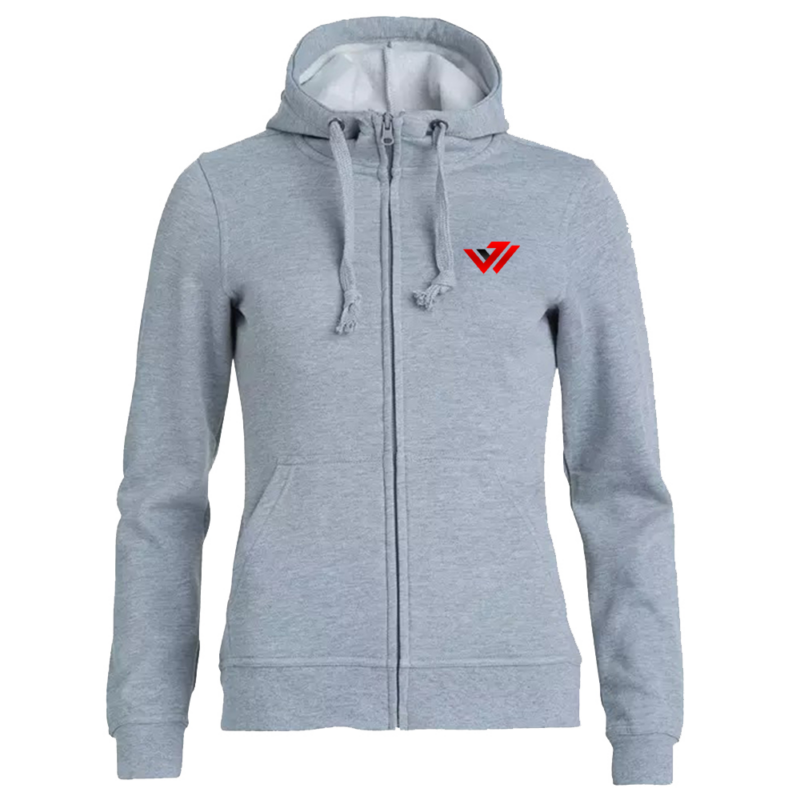
Fleece has a brushed, fuzzy inside and feels warmer. French terry has soft loops inside and feels lighter and more breathable. Choose fleece for cold weather and French terry for spring, autumn and activewear.
Both are knit fabrics used for hoodies, but they behave differently:
- Brushed fleece: warm, soft and cozy. Better for winter hoodies and heavier GSM.
- French terry: smooth outside, looped texture inside. Lighter, more breathable and often more comfortable in mild weather. Popular for lightweight hoodies and gym-friendly pieces.
If you’re building a collection, many brands offer both: a heavier fleece hoodie for cold months and a lighter French terry option for the rest of the year.
4. How Much Do Cotton Hoodies Shrink, and How Do I Control It?
Untreated cotton can shrink 3 to 5% or more in the first wash, mostly in length. You control it by using pre-shrunk or compacted fabric, asking for a shrinkage test report, setting a written tolerance and keeping your care label honest.
Shrinkage is the number one complaint in cotton apparel, and it’s almost always avoidable. It happens because cotton fibers relax and tighten when wet and heated, and knits are especially prone to it.
Ways to reduce shrinkage:
- Use pre-shrunk or compacted fabric. Mills can treat knit fabric so most of the shrinking has already happened before the garment is cut.
- Choose combed, ring-spun yarn for a more stable, smoother knit.
- Consider a cotton/poly blend if shrinkage tolerance is very tight.
- Allow for it in the pattern. Good pattern makers account for expected shrinkage in measurements.
- Test before bulk. Wash the pre-production sample according to the care label, then measure again.
- Write a tolerance into the order. For example: maximum shrinkage of 5% in length and width after one wash. Many buyers use an agreed limit like this as the standard.
Testing standards worth knowing: ISO 6330 covers domestic washing and drying procedures, ISO 5077 covers measuring dimensional change, and AATCC 135 is a common US method for dimensional change in home laundering. You don’t need to run them yourself, but you can ask your supplier which method they follow.
Care label tip: Don’t promise “machine wash hot” on a cotton hoodie to make it sound convenient. A realistic label (cold or 30°C wash, low tumble or line dry) means fewer returns.
5. Combed Ring-Spun vs Carded Open-End Cotton: Does It Matter?
Yes. Combed ring-spun cotton is smoother, stronger and pills less, so it suits premium hoodies. Carded open-end cotton costs less and works for budget or promotional orders.
- Combed ring-spun: the short, rough fibers are removed and the yarn is spun tightly. The result is a softer, more even fabric with better print definition and longer wear.
- Carded open-end: a less refined process that produces a rougher, more textured yarn. It’s economical, but pilling and uneven surface are more likely.
If your hoodie is a core product with your name on it, combed ring-spun is usually worth the extra cost. If it’s a giveaway or a one-time event hoodie, open-end may be perfectly fine.
6. Which Printing and Branding Methods Work on Cotton Hoodies?
Embroidery, screen printing and DTF all work well on cotton. Full sublimation does not, because it only bonds properly to polyester.
This catches a lot of first-time buyers off guard. If you want an all-over printed hoodie, you generally need a high-polyester fabric. For cotton and cotton-rich hoodies, use:
- Embroidery for chest logos, sleeve details and a premium look.
- Screen printing for bold, cost-effective logos at larger quantities.
- DTF (direct-to-film) for detailed, multi-color artwork and smaller runs.
- Puff, silicone or embossed finishes for texture and a streetwear feel.
Tell your supplier the fabric and the decoration method together. A good factory will warn you if a combination won’t work.
7. What Should I Check When Buying Cotton Hoodies Wholesale for the EU or US?
Check fabric specs (GSM, composition), shrinkage and quality testing, labelling requirements for your market, size and fit standards, and who handles duties and customs.
Here’s a practical checklist:
Fabric and quality
- Fiber composition and GSM stated in writing
- Yarn type (combed ring-spun or not)
- Pre-shrink treatment and shrinkage tolerance
- Colorfastness and pilling expectations
Compliance and labelling
- EU: textile fibre content labelling follows Regulation (EU) No 1007/2011, and many buyers also ask for OEKO-TEX Standard 100 and REACH-compliant dyes and finishes.
- US: the FTC requires fiber content, country of origin and care labelling on textile garments.
- Check current rules for your own market before printing labels, since requirements can change.
Sizing and fit
- European customers often prefer a slightly different fit than US customers. Agree on a size chart in centimetres and inches, and confirm grading from youth to 5XL if you sell wide ranges.
Logistics
- Ask whether prices are FOB or DDP. With DDP, the supplier handles duties and customs clearance and delivers to your door, which makes budgeting simpler.
8. How Do I Make Sure the Bulk Order Matches the Sample?
Approve a pre-production sample in writing, lock the spec (GSM, composition, colors, measurements), agree inspection standards such as AQL 2.5, and ask for in-line checks during production.
A beautiful sample means nothing if bulk looks different. To protect yourself:
- Approve the PPS. Treat the pre-production sample as the standard bulk must match.
- Lock the spec sheet. Include GSM and tolerance, fiber composition, colors, measurements, trims and print placement.
- Request the same fabric lot for sample and bulk where possible, to reduce shade differences.
- Ask about inspection. AQL 2.5 is a widely used quality limit for final inspection. In-line checks catch problems earlier, when they’re cheap to fix.
- Do a wash test on a bulk sample before releasing the full shipment if shrinkage is a concern.
- Keep everything in writing. Emails and signed spec sheets avoid arguments later.
Which Hoodie Fabric Is Right for You? (Quick Guide by Customer Type)
| If you are… | Suggested fabric | GSM | Why |
| A streetwear or fashion brand | 100% cotton fleece, combed ring-spun | 380 to 450 | Premium feel, structure, strong print and embroidery |
| A private label retail brand | Cotton-rich fleece | 300 to 350 | Balanced cost, comfort and durability |
| A sports club or school | Cotton/poly blend fleece | 280 to 330 | Holds up to frequent washing, less shrinkage |
| A corporate or promo buyer | Cotton/poly blend, carded yarn | 240 to 300 | Budget-friendly, consistent for larger runs |
| A wholesaler or distributor | Midweight cotton or blend | 300 to 350 | Easy to sell across seasons |
| A gym or activewear brand | French terry or lighter fleece | 240 to 300 | Breathable, easier to layer |
Spec Sheet: What to Send Your Hoodie Manufacturer
Copy this into your next email and you’ll get a more accurate quote and a better sample:
- Product: men’s, women’s or unisex pullover or zip hoodie
- Fabric type: fleece or French terry
- Fiber composition: e.g., 100% cotton, 80/20 cotton/polyester
- GSM and tolerance: e.g., 320 GSM, ±5%
- Yarn: combed ring-spun or carded
- Pre-shrink treatment and maximum shrinkage allowed
- Colors (Pantone references if possible)
- Decoration: embroidery, screen print, DTF, placement and artwork files
- Sizes and size chart (include youth to 5XL if needed)
- Labels: woven neck label, care label, hangtag, packaging
- Quantity per style and per color
- Destination and shipping terms (FOB or DDP)
- Target delivery date
Frequently Asked Questions
Is 100% cotton always better than a blend for hoodies?
Not always. Cotton feels softer and more natural, but a blend usually shrinks less, holds its shape better and costs less. The right choice depends on your customer and how often the hoodies will be washed.
Will my hoodies shrink after the first wash?
Cotton can, especially if the fabric wasn’t pre-shrunk. To avoid surprises, ask for pre-shrunk or compacted fabric, agree a maximum shrinkage limit in writing and test the sample after washing.
What is the best GSM for a heavyweight hoodie?
Heavyweight hoodies typically sit between 350 and 450 GSM. Always specify the number and tolerance in your brief, not just the word “heavy.”
Why does my sample feel better than my bulk order?
Usually because the bulk used a different fabric lot, a different GSM or a different finish. Prevent it by locking the spec, approving a PPS and requesting in-line and final inspections.
Can I print an all-over design on a cotton hoodie?
Not with traditional sublimation, which works on polyester. For cotton, use DTF, screen printing or embroidery. For all-over designs, choose a high-polyester fabric.
What causes pilling, and can I prevent it?
Pilling comes from short, loose fibers rubbing together. Combed ring-spun yarn, good knitting quality and proper finishing reduce it. Ask your supplier about pilling performance if the hoodie will see heavy wear.
What is a reasonable MOQ for custom cotton hoodies?
Many factories ask for hundreds of pieces per style. At JACX Wears, the MOQ is 20 pieces per style, which makes it practical to test a hoodie before scaling.
How long does production take?
At JACX Wears, pre-production samples take 3 to 5 business days and bulk production takes about 24 days after sample approval. Exact timing depends on quantity and decoration.
How do I avoid surprise customs charges when importing hoodies?
Choose DDP terms. Under DDP, the supplier handles import duties and customs clearance and delivers to your address, so your landed cost is clearer from the start.
Will the hoodies fit my European (or US) customers properly?
Agree a size chart in advance, request a sample in your core sizes and check measurements against your own best-fitting hoodie. Sizes from youth to 5XL can be graded to US and European fit standards.
Can I use my own labels and packaging?
Yes. Custom woven labels, care tags, hangtags and branded polybags are available for private label orders.
What if I’m not sure which fabric to choose?
Send us your target customer, price point and any reference hoodie you like. We’ll recommend a fabric, GSM and decoration method that suit your goals and budget.
Final Thoughts
Picking a hoodie fabric doesn’t have to be a gamble. Decide your customer first, choose a GSM that fits their needs, understand the trade-off between cotton and a fleece blend, control shrinkage in writing, and lock the spec before bulk begins. Do that, and your hoodies will look and feel the same on the shelf as they did in the sample.
Ready to Order Custom Cotton Hoodies?
JACX Wears is an ISO 9001-certified OEM and private label manufacturer in Sialkot, Pakistan, supplying brands, clubs and businesses across the USA, UK and Europe. Low MOQ from 20 pieces per style, pre-production samples in 3 to 5 days, AQL 2.5 inspection and DDP delivery to your door.
- Request a Free Quote
- Browse Men’s Hoodies | Women’s Hoodies | Sweatshirts
- See How Ordering Works
- Tour Our Factory
Send us your target GSM, fabric and artwork, and we’ll come back with a clear quote and sample plan.
One thought on “Cotton Hoodie Fabric Guide for Bulk Buyers: 8 Questions to Answer Before You Order”