
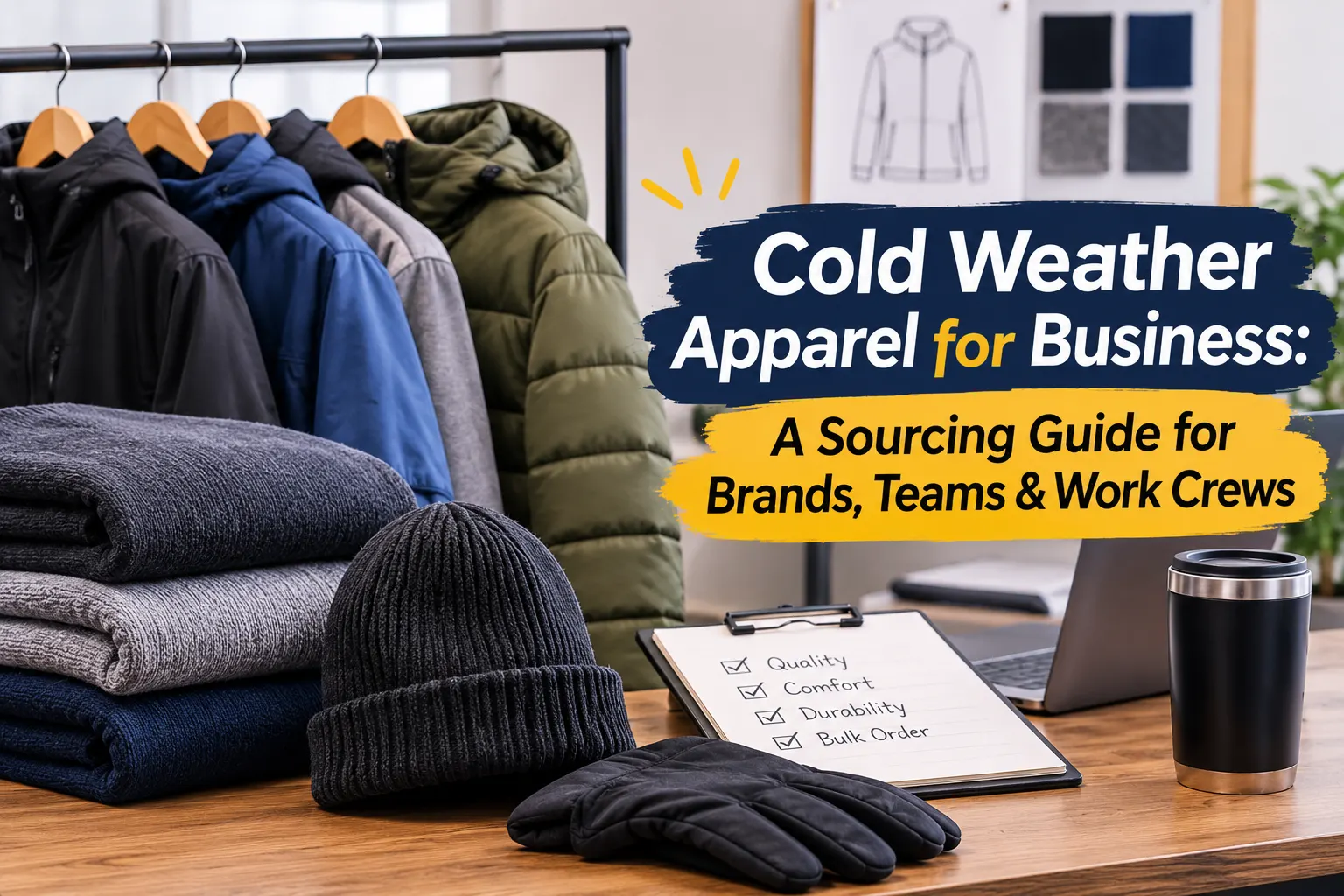
Winter orders go wrong in a predictable way. The samples look great in October, the bulk run lands in January, and the jackets that were supposed to carry your season are now sitting in a warehouse while customers shop elsewhere.
If you buy cold weather apparel for a brand, a sports club or a work crew, the real job isn’t picking a style. It’s choosing the right pieces, specifying them properly, and working back from your in-stock date so they arrive when winter does.
This guide is written for buyers. We’re JACX Wears, an ISO 9001-certified custom apparel manufacturer in Sialkot, Pakistan, supplying brands, teams and businesses across the USA, UK, Germany and the wider EU. Here’s how we’d approach a cold weather range if it were ours.
What Counts as Cold Weather Apparel for B2B Buyers?
For a buyer, cold weather apparel means any garment that keeps the wearer warm, dry and mobile in low temperatures, and that you can order consistently in volume. That includes softshell jackets, hoodies, sweatshirts, flannel shirts, varsity jackets, tracksuits, pants, caps and work gloves.
The difference between a retail shopper and a buyer is repeatability. A single jacket only has to be good once. Your order has to be good across hundreds of pieces and again when you reorder next season.
That’s why the first questions aren’t about style. They’re about who wears it, how long they’re outside, and how hard they’re working.
Know Your Buyer Type First
Different buyers need different cold weather ranges, even when the products look similar.
- Apparel and streetwear brands: You’re selling to consumers, so fit, color, branding and seasonal timing matter most. Hoodies, sweatshirts, varsity jackets and tracksuits usually lead the range.
- Sports clubs, teams and schools: You need consistent sizing across a squad, from Youth to adult, plus team colors and logos. Softshell jackets, tracksuits and hoodies are common.
- Workwear and industrial buyers: Durability and layering matter more than fashion. Think flannel shirts, work pants, working gloves, mechanic gloves and rain suits.
- Wholesalers and distributors: You need steady quality, clean packaging and reorder consistency more than anything else.
Build the Range Around a Layering System
Whatever your buyer type, the most dependable way to design cold weather apparel is around layers. Dressing for the cold works best when three layers work together, so it makes sense to build your range the same way:
- Base layer: Moisture-wicking pieces worn against the skin.
- Mid layer: Fleece-lined or brushed items that hold heat, like hoodies, sweatshirts and flannel.
- Outer layer: Wind-resistant jackets such as softshell jackets and varsity jackets.
Designing around layers also helps your sales. A customer who buys a hoodie is a short step from buying the jacket that goes over it, so a layered range sells itself better than a handful of unrelated pieces.
Best Cold Weather Apparel Styles to Source
Here’s where each style fits in a B2B range, based on what we make at JACX Wears.
Softshell Jackets
Softshells are the workhorse outer layer. They block wind, shed light rain, and stretch enough to move in. They work for team outerwear, corporate uniforms and outdoor crews alike, and they take embroidery and printed logos well.
Hoodies and Sweatshirts
Hoodies are the easiest cold weather pieces to sell and the easiest to brand. We make both men’s and women’s styles, plus sweatshirts. They suit brand drops, team merch and staff uniforms.
Flannel Shirts
A heavyweight flannel shirt is a popular mid layer for outdoor and trade crews. It’s warm, durable and easy to wear all day.
Varsity Jackets and Tracksuits
Varsity jackets and tracksuits are strong for schools, clubs and brands that want a more styled winter look.
Work Gloves, Pants and Rain Suits
For work crews, don’t overlook the supporting pieces. Cold hands slow people down, so working gloves and mechanic gloves are worth including in a winter order. Rain suits protect the insulation underneath on wet days.
What to Put in Your Spec (So Bulk Matches the Sample)
A vague brief gets you a vague product. The more clearly you define the garment up front, the closer your bulk order will match the sample. Here’s what we’d suggest including:
- Fabric and weight (GSM): Heavier fabric is warmer but bulkier. Say which you want.
- Lining: Fleece, brushed, or unlined, and where.
- Water and wind resistance: Whether you need a water-repellent finish, and how much.
- Fit and sizing: Youth to 5XL is available, so state your size range and fit (regular, relaxed, slim).
- Colors and trims: Exact color references, zips, cuffs and drawcords.
- Branding: Logo placement, size, and technique.
- Labels and packaging: Woven labels, neck tags, hangtags and polybags.
If you don’t have a tech pack, we can develop one from your sketches, reference garments or artwork, along with pattern grading.
Branding Options for Cold Weather Apparel
Thick or textured fabrics behave differently under different decoration methods, so it’s worth choosing the method with the garment, not after it. We offer:
- Embroidery, including 3D puff
- Screen printing
- DTF printing
- Sublimation
- Tackle twill
- Embossing
- Silicone printing
As a rule of thumb, embroidery and tackle twill tend to suit heavier jackets and varsity styles, while screen printing and DTF work well on hoodies and sweatshirts. We’ll recommend the best option when we see your artwork and fabric.
MOQ, Samples and Lead Times
Here’s how ordering works with us, so you can plan your season:
- MOQ: 20 pieces per style, with volume discounts on orders of 50+ pieces.
- Pre-production sample (PPS): 3-5 business days, so you can check fit, fabric and branding before bulk.
- Bulk production: About 24 days after sample approval.
- Shipping: DDP (Delivered Duty Paid), door-to-door to the USA, UK, Germany and the EU via DHL, FedEx or UPS.
A quick planning tip: work backward from the date you need stock. Add transit time to the 24-day production window, add sampling and approval time on top, and then give yourself a buffer for revisions. Brands that start sampling early in the year rarely have to rush.
Low MOQ also changes how you can test the market. You can run a small first batch of a style, see how it sells, and reorder the winners instead of committing to a big run on a guess.
Quality Control: Don’t Skip This for Winter Gear
Cold weather garments are heavier and more complex than T-shirts, so there’s more that can go wrong: seams, zips, linings, print adhesion and shrinkage.
Every JACX Wears order goes through in-line QC at each stage of production, followed by a final AQL 2.5 inspection before it ships. When you review a sample, check the basics yourself too: seam strength at stress points, zip action, lining alignment, and how the garment looks after a wash.
Common Sourcing Mistakes to Avoid
- Ordering late. Winter products need lead time. Start sampling early.
- Skipping the sample. A PPS costs little compared with a misfit bulk order.
- Choosing on price alone. The cheapest fabric weight often feels thin and sells poorly.
- Forgetting the size range. A team or crew needs full sizing, not just the common ones.
- Not planning reorders. If a style sells, you need the same fabric and fit again. Keep your tech pack and approved sample on file.
FAQs
What is cold weather apparel?
Cold weather apparel is clothing designed to keep people warm, dry and comfortable in low temperatures. It includes base layers, fleece, hoodies, softshell jackets, flannel, gloves and winter workwear, and it works best as a layered system.
Can I order custom cold weather apparel with a low MOQ?
Yes. JACX Wears accepts orders from 20 pieces per style, with volume discounts on orders of 50+ pieces. That makes it practical to test a new winter style before committing to a larger run.
What cold weather apparel can JACX Wears manufacture?
We make softshell jackets, varsity jackets, men’s and women’s hoodies, sweatshirts, flannel shirts, tracksuits, pants, caps, working and mechanic gloves, and rain suits. Tell us your use case and we’ll suggest the right mix.
How long does it take to produce a custom winter order?
A pre-production sample takes 3-5 business days. After you approve it, bulk production usually takes about 24 days, plus shipping time. Starting early in the year gives you room for adjustments.
Can you add my own labels and packaging?
Yes. We offer custom woven labels, neck tags, hangtags and branded polybags, so your cold weather apparel arrives ready to sell under your brand.
Do you ship cold weather apparel to the USA and Europe?
Yes. We ship DDP (Delivered Duty Paid) door-to-door to the USA, UK, Germany and the EU via DHL, FedEx or UPS, which means duties and customs clearance are handled for you.
What’s the best cold weather clothing for work crews?
Crews do best with removable layers: a base layer, a fleece-lined hoodie or flannel, and a wind-resistant outer layer, plus working gloves. Because workers heat up while moving and cool down when they stop, flexible layers beat one heavy coat.
Ready to Build Your Cold Weather Range?
If you’re planning a winter line for your brand, team or crew, we’d like to help you get it right the first time. Send us your sketches, a reference garment or just your idea, and we’ll come back with options, pricing and a sampling plan. We customize to your choice, from sizes and fabrics to colors, logos, labels and packaging.
Request a free quote or email info@jacxwears.com. You can also WhatsApp us at +92 340 4716117. If you’d like to see how the process works first, read our ordering guidelines.