
Here is a story that happens more often than you think. A store owner orders 300 hoodies, splits them evenly across S, M, L, XL and 2XL, and feels good about it. Three weeks later, the 2XL and 3XL are gone, a customer is asking for a 4XL tall, and the small sizes are sitting on the shelf collecting dust.
The problem isn’t the hoodies. It’s the size plan.
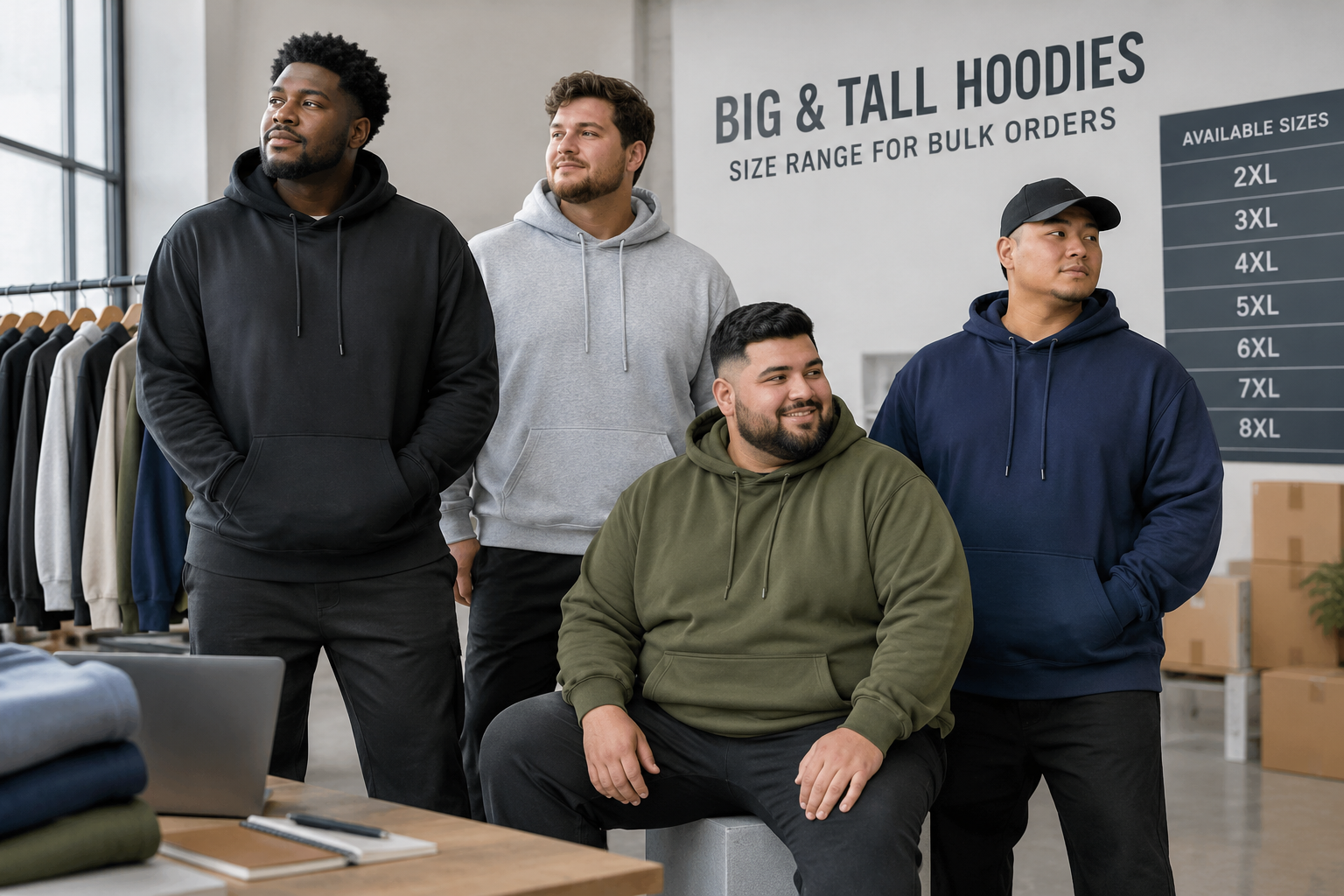
This guide is about big and tall hoodies: size range for bulk orders, written for retailers, brands and team buyers in the USA, UK and EU. You’ll see exactly which sizes exist, how to read a size chart, and how to split your quantities so you stop overstocking the wrong sizes. If you’re ready to talk numbers right now, request a wholesale quote from Jacx Wears and we’ll help you plan it.
Quick Answer: Big and Tall Hoodies Wholesale USA
Big and tall hoodies wholesale USA, in short: most bulk suppliers offer big sizes from 2XL to 6XL (some go up to 8XL) and tall sizes from LT to 4XLT. For a mixed bulk order, a safe starting ratio is about 55% big sizes and 45% tall sizes, with the largest share going to 2XL, 3XL, 2XLT and 3XLT. Never order equal quantities per size. Order by ratio.
What Are Big and Tall Hoodies (and How Are They Different)?
People often mix these two up, and that’s where wholesale mistakes start.
Big hoodies are made for people who need more room in the chest, waist and arms. They’re standard length, but wider. Think 2XL, 3XL, 4XL and up.
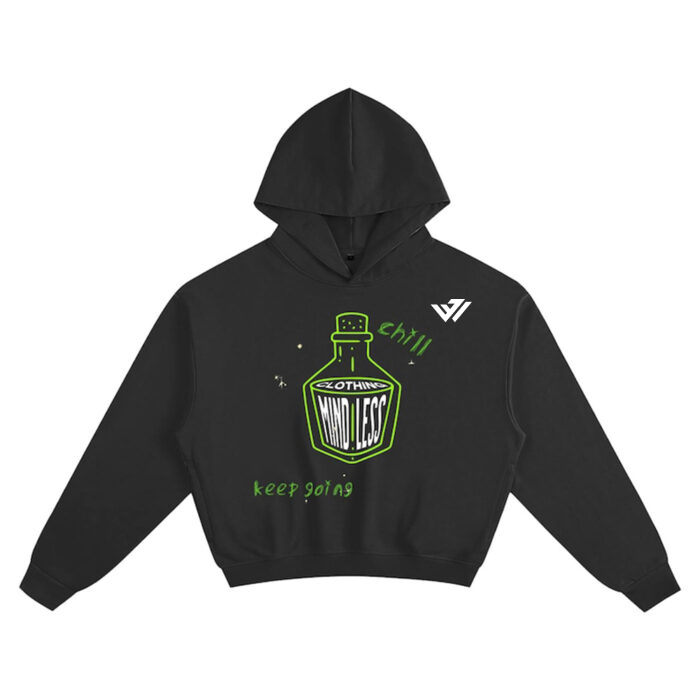
Tall hoodies are made for people who need extra length in the body and sleeves, without necessarily needing a lot more width. You’ll see them labelled LT, XLT, 2XLT, 3XLT and 4XLT. The “T” stands for tall. Tall tees and hoodies usually run a few inches longer than the same size in a regular cut.
Big and tall hoodies combine both. They give you more width and more length, which is what a lot of taller, broader customers have struggled to find in regular stores.
Some sellers also call them longline hoodies. That’s a slightly different thing, since longline is often a fashion choice, while tall is a real fit solution. Both can sell well. Just don’t mix them up on your product pages, because buyers search for them separately.
Why are retailers adding them to their range?
Because the demand is real and the competition is thin. Big-box stores carry a few sizes, then stop. Customers who wear 3XLT or 4XL often have to hunt online, and when they find a good fit, they come back. If you’re a retailer, a brand or a merch seller, a proper big and tall line gives you repeat buyers, fewer returns and less price pressure.
Big and Tall Hoodies: Size Range for Bulk Orders at a Glance
Here’s the typical size range you’ll find when ordering wholesale in the USA, UK and EU.
| Category | Common Sizes | Best For |
| Big (regular length) | 2XL, 3XL, 4XL, 5XL, 6XL | Retail stores, workwear, merch for broader builds |
| Tall (regular width) | LT, XLT, 2XLT, 3XLT, 4XLT | Taller customers, sports teams, basketball and volleyball clubs |
| Big and Tall (combined) | 2XLT to 4XLT, plus 5XL and 6XL in select styles | Brands building a full inclusive range |
A few things to keep in mind:
- Not every style comes in every size. Pullover hoodies usually have the widest size range. Zip hoodies and heavyweight fleece styles can be more limited.
- Tall sizes usually stop around 4XLT. Beyond that, you’re often looking at custom production.
- Pricing can step up in bigger sizes because they use more fabric. Always ask for the price per size band before you finalize the order.
Some competitor pages list a limited range, for example tall sizes from LT to 4XLT in only a handful of styles. That’s fine for a one-off buyer, but if you’re building a brand, you’ll want a supplier who can plan the whole size curve with you.
Size Chart and Ratio Planning: Stop Guessing, Start Selling
This is the part most guides skip, and it’s the part that saves you the most money.
What does a big and tall hoodie size chart look like?
Sizes vary by brand and cut, so treat the numbers below as typical ranges, not promises. Always compare against the supplier’s own spec sheet before ordering.
| Size | Chest Width (flat, inches) | Body Length (inches) | Sleeve Length (inches) |
| 2XL | 25 – 26 | 30 – 31 | 25 – 26 |
| 3XL | 27 – 28 | 31 – 32 | 26 – 27 |
| 4XL | 29 – 30 | 32 – 33 | 27 – 28 |
| 5XL | 31 – 32 | 33 – 34 | 28 – 29 |
| 6XL | 33 – 34 | 34 – 35 | 29 – 30 |
| 2XLT | 25 – 26 | 33 – 34 | 27 – 28 |
| 3XLT | 27 – 28 | 34 – 35 | 28 – 29 |
| 4XLT | 29 – 30 | 35 – 36 | 29 – 30 |
Flat chest width is measured straight across the garment, from armpit to armpit. Double it to get the full chest circumference. For UK and EU buyers, ask for centimetre measurements too (1 inch is about 2.54 cm).
Tip: measure a hoodie your customers already love, lay it flat, and compare it with the supplier’s chart. That ten-minute check prevents most fit complaints.
What is ratio planning, in simple words?
Ratio planning means you decide what share of your order goes to each size, instead of splitting everything evenly. Real customers don’t buy evenly. Most people cluster around the middle of the size range, and the extremes sell slowly.
A starting ratio for big sizes (2XL to 6XL)
| Size | Share of Big Sizes |
| 2XL | 35% |
| 3XL | 30% |
| 4XL | 20% |
| 5XL | 10% |
| 6XL | 5% |
A starting ratio for tall sizes (LT to 4XLT)
| Size | Share of Tall Sizes |
| LT | 10% |
| XLT | 15% |
| 2XLT | 33% |
| 3XLT | 28% |
| 4XLT | 14% |
Example: a 200-piece mixed bulk order
Say you’re ordering 200 hoodies and want a 55/45 big-to-tall split.
- Big sizes (110 pieces): 2XL 40, 3XL 35, 4XL 20, 5XL 10, 6XL 5
- Tall sizes (90 pieces): LT 10, XLT 15, 2XLT 30, 3XLT 25, 4XLT 10
That gives you depth where customers actually buy and only a small “just in case” stock on the edges.
How should the ratio change for different buyers?
- Retail stores: go heavier on 2XL, 3XL and 2XLT. These are your steady sellers.
- Sports teams and clubs: tall sizes matter more. Basketball, volleyball and rowing teams often need XLT to 3XLT in volume.
- Streetwear and merch brands: your audience may prefer an oversized look, so watch 3XL and 4XL, and test a small run of 5XL.
- Corporate uniforms: collect real size data from staff first, then add about 10% buffer for replacements and new hires.
What Is the Minimum Order Quantity for Wholesale Big and Tall Hoodies?
MOQ depends on the supplier, the style and whether you want custom branding. Some wholesalers keep MOQs low to help new brands, while custom-made or private label styles usually need higher quantities. Another competitor example from the tall-clothing space accepts bulk quotes starting at around 50 pieces in some cases and goes up to thousands.
Here’s how to think about it:
- Blank styles: usually the lowest MOQ, because the supplier is working from existing stock or standard production.
- Custom prints or embroidery: MOQ often rises because of setup and production runs.
- Fully custom (your own cut, fabric and labels): the highest MOQ, but also the most control over the fit.
If you’re testing the market, start with one style, two colours and a tight size ratio. Reorder once you see what sells. You can always scale up.
Which Fabric and Weight Is Best for Bulk Big and Tall Hoodies?
Fabric changes the fit, the feel and the price. Here are the three things to check.
1. Material. Cotton feels soft and breathable. A cotton and polyester blend, such as 50/50, resists shrinking and wrinkling and usually costs less. Fleece-lined hoodies are warmer. Some suppliers also offer pre-shrunk cotton, which matters a lot for tall hoodies, because a hoodie that shrinks in length defeats the whole purpose.
2. Weight (GSM or oz). Midweight hoodies sit around 280 to 350 GSM and suit most retail use. Heavyweight styles above that feel premium and work well for streetwear and cold climates. For the USA, weights are often listed in ounces, so a 9 oz hoodie is roughly 305 GSM.
3. Construction. Look for ribbed cuffs and hem, a double-layered hood, reinforced seams and a roomy kangaroo pocket. On big sizes, the drawstring and neck opening should scale up too, not stay the same as a medium.
Can You Customize Big and Tall Hoodies in Bulk?
Yes, and this is where a lot of brands make their margin. Common options include:
- Screen printing for large quantities and bold designs
- Embroidery for logos on the chest or sleeve, popular with teams and corporate buyers
- DTF or heat transfer for detailed, multi-colour artwork in smaller runs
- Private label with your own neck labels, hang tags and packaging
One tip that gets missed: scale your print placement by size. A logo that sits perfectly on a medium can look tiny on a 5XL, and a chest print can sit too high on a tall hoodie. Ask your supplier whether they adjust artwork placement across sizes, or at least by size group.
How Does Wholesale Work for the USA, UK and EU?
If you’re buying across borders, a few details matter more than the hoodie itself.
For USA buyers: confirm the sizing standard (US sizes, inches), shipping time to your state, and whether the quote includes freight. Ask about sample shipping too.
For UK buyers: after Brexit, imports can involve customs declarations, duties and VAT. Ask the supplier whether they can ship on a duties-paid basis so there are no surprises at the door.
For EU buyers: check VAT handling, delivery to your member state and whether the supplier provides the right commercial invoice and product information.
For everyone: ask for measurements in both inches and centimetres, and confirm lead time in writing, since production can slow down around holiday seasons.
What Are the Most Common Mistakes in Bulk Big and Tall Orders?
- Splitting sizes evenly. This is the number one cause of dead stock.
- Mixing up big and tall. A 3XL is not a 3XLT. Customers will return the wrong one.
- Skipping the sample. A sample shows you the real length, sleeve and fabric weight.
- Ignoring shrinkage. Ask whether the fabric is pre-shrunk, especially for tall sizes.
- Forgetting the lead time. Plan your order before the season, not during it.
- Not asking for a size chart in writing. Different brands run differently, so get the numbers.
Avoid these six, and your next order will already be better than most.
How to Place a Bulk Order in 5 Simple Steps
If you’re planning big and tall hoodies: size range for bulk orders, here’s a clean path from idea to delivery.
- Define your customer. Who’s buying, and what sizes do they usually wear?
- Pick your style. Pullover, zip-up, heavyweight, lightweight or fleece.
- Set your size ratio. Use the tables above as a starting point.
- Order a sample. Check fit, length and fabric before you commit.
- Confirm quote, lead time and shipping. Get everything in writing, then place your order.
Why Buy Big and Tall Hoodies from Jacx Wears?
Buying in bulk is a trust decision. You want a supplier who answers quickly, explains sizing honestly and doesn’t disappear after the invoice. At Jacx Wears, the goal is to make wholesale simple for brands, retailers and teams in the USA, UK and EU: clear size guidance, ratio support before you order, and customization options that fit your branding.
If you’re unsure where to begin, send us your target quantity, your market and your budget. We’ll help you shape the order so it sells through.
Frequently Asked Questions (FAQs)
What sizes are included in big and tall hoodies wholesale?
Big sizes typically run from 2XL to 6XL, and tall sizes from LT to 4XLT. Some styles go higher, and some have a narrower range, so always confirm the size list for the exact style you want.
What is the difference between big and tall hoodies?
Big hoodies add width through the chest, waist and arms. Tall hoodies add length to the body and sleeves. Big and tall hoodies combine both for customers who need extra room and extra length.
How do I choose the right size ratio for a bulk order?
Start with a bell-curve split: more pieces in the middle sizes (2XL, 3XL, 2XLT, 3XLT) and fewer at the edges (LT, 5XL, 6XL, 4XLT). Then adjust with your own sales data or your customer’s real measurements.
What is the minimum order for wholesale tall hoodies?
It depends on the supplier and whether the order is blank or customized. Blank styles tend to have lower minimums, while custom cuts and private label need higher quantities. Ask for a written quote based on your exact style and size mix.
Can I order samples before placing a bulk order?
In most cases, yes. A sample lets you check the length, sleeve, fabric weight and print quality. For big and tall sizes, it’s one of the smartest steps you can take.
Do you ship big and tall hoodies to the USA, UK and EU?
Wholesale suppliers commonly ship internationally. What changes is the cost, transit time and tax or duty handling. Confirm whether your quote includes freight, duties and VAT.
Are tall hoodies only for men?
No. Tall hoodies are often cut as a men’s or unisex style, but many women, teens and athletes who need extra length wear them too. Many buyers sell them as unisex.
Can I add my logo to bulk big and tall hoodies?
Yes. Screen printing, embroidery and heat transfer are common. Make sure the logo placement and size are adjusted for larger and taller sizes so the design looks balanced.
Final Thoughts:
Good wholesale isn’t about ordering more. It’s about ordering right. When you understand big and tall hoodies: size range for bulk orders, read a size chart properly and plan your ratio before you buy, you protect your cash, keep customers happy and build a range that people come back for.
Start with a sample, use a smart ratio, and scale from there.